Episode 15 of “The Final Dawn”
The years leading up to the Hijrah were among the most difficult in the life of the Prophet Muhammad (saw). In a short span of time, he lost the two people who had protected and supported him the most — his uncle Abu Talib, who shielded him from Quraysh, and his wife Khadijah (RA), who strengthened him when the world turned away.
Soon after came the painful rejection at Ṭaif. The Prophet (saw) was mocked, chased, and stoned until blood ran down his feet. It was a moment when every path on earth seemed blocked. But Allah opened a path from the heavens. The Night Journey (al-Isra wal-Mi‘raj) came as reassurance — a reminder that Allah had not abandoned His Messenger.
That miracle was also a signal. A new phase of the mission was approaching. One that required a new home, a new community, and a new beginning. That place was already being prepared by Allah — a city to the north known as Yathrib.
Seeds of Hope in Yathrib
While persecution in Makkah was intensifying, something unexpected was happening in Yathrib. The city had long been divided by tribal conflict between Aws and Khazraj, and tensions ran deep. During one Hajj season, a small group from the tribe of Khazraj met the Prophet (saw) at Mina.
They listened carefully as he spoke about worshipping one God, justice, and moral responsibility. The message resonated deeply. They recognized the signs they had heard about from the Jewish tribes in their city and said to one another that they should not be the last to believe.
They accepted Islam quietly, without any formal pledge. When they returned home, they carried the message with them. Slowly, Islam began to spread through households in Yathrib — quietly, naturally, and sincerely.
The following year, twelve believers met the Prophet (saw) secretly at al-‘Aqabah. Under the cover of night, they pledged to abandon idolatry and live according to Islamic morals. This pledge was not yet about protection, but it marked the first formal bond between Islam and Yathrib.
To guide this growing community, the Prophet (saw) sent Mus‘ab ibn ‘Umair — a young companion known for his wisdom, patience, and gentle character. Mus‘ab lived among them, taught the Qur’an, and invited people to Islam one home at a time. Through his efforts, respected leaders from both Aws and Khazraj accepted Islam, and a city once divided began to unite.
The Second Pledge at al-‘Aqabah
The following year, the moment of decision arrived. Seventy-three men and two women from Yathrib met the Prophet (saw) secretly at al-‘Aqabah. This time, the pledge was different.
They promised not only belief, but protection. They pledged to defend the Prophet (saw) as they would their own families, even if it meant war. With this commitment, the door of migration officially opened.
The Quiet Migration Begins
After the second pledge, the Prophet (saw) instructed his companions to leave Makkah quietly. They departed in small groups, often under the cover of night. Many left behind their homes, wealth, and families, carrying nothing but their faith.
In Yathrib, doors were opened and hearts were ready. The city prepared itself for the arrival of the one man who still remained behind — the Messenger of Allah (saw).
Quraysh’s Final Plot
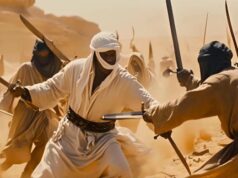
As Quraysh watched Makkah slowly empty, panic set in. Islam was no longer contained. In Dār al-Nadwah, they gathered to make a final decision. After debate, they agreed on a coordinated assassination — one man from each clan would strike together, ensuring no single tribe could be blamed.
That night, armed men surrounded the Prophet’s (saw) home.
Ali Sleeps in His Place
Inside the house, the Prophet (saw) instructed ‘Ali ibn Abi Talib to sleep in his bed. ‘Ali obeyed without hesitation, knowing the danger.
As the assassins watched the figure under the blanket, the Prophet (saw) quietly walked past them, reciting verses from Surah Yasin. He left Makkah not out of fear, but because the mission now required a new beginning.
The Cave of Thawr
Instead of heading north, the Prophet (saw) and Abu Bakr went south toward the Cave of Thawr. Abu Bakr entered first, sealing holes with cloth and even his own body. When Quraysh’s search parties reached the cave, Abu Bakr feared discovery.
The Prophet (saw) reassured him calmly:
“Do not fear. Allah is with us.”
A spider’s web and nesting birds covered the entrance. The searchers moved on, convinced no one could be inside.
The Chase of Suraqah
After three days, they resumed their journey with a guide. Quraysh had announced a massive reward. Suraqah ibn Malik pursued them, but his horse repeatedly stumbled into the sand. Realizing divine protection was at work, he asked for safety.
The Prophet (saw) granted it — and foretold something unimaginable: that Suraqah would one day wear the bracelets of the Persian emperor. Shaken, Suraqah turned back and misled other search parties, unknowingly protecting the Hijrah.
Arrival in Quba
When the Prophet (saw) reached Quba, the people had been waiting anxiously for days. When they finally saw him, joy filled the streets. He stayed there briefly and helped build the first masjid in Islam — simple, but foundational.
Entering Madinah
On Friday, the Prophet (saw) entered the city. Children climbed rooftops. Voices filled the streets. He led the first Jumu‘ah prayer and allowed his camel to walk freely until it stopped at land owned by two orphan boys. That land was purchased, and Masjid an-Nabawi was built.
The Prophet (saw) worked alongside his companions, carrying bricks himself. The masjid became the center of the new society — a place of worship, learning, justice, and community.
A Turning Point in History
The Hijrah was not an escape. It was a transformation.
From persecution to leadership.
From isolation to unity.
From a cave in the mountains to a city built on faith. In Madinah, the Prophet (saw) did not just find safety — he built a society rooted in justice, mercy, and trust in Allah. This was the beginning of a nation that would change the course of history.