Makkah was changing.
What had once been a confident city built on trade, lineage, and idols was slowly becoming a place of fear. The message of La ilaha illa Allah had spread beyond whispers. Islam was no longer something that could be ignored or quietly dismissed.
The leaders of Quraysh had tried mockery, negotiation, and even bribes. None of it worked. Faith continued to grow — quietly, steadily, and with increasing strength.
When persuasion failed, cruelty followed.
Persecution of the Weak
The chiefs of Quraysh knew they could not harm the Prophet Muhammad (saw) directly. His uncle, Abu Talib, still protected him. So instead, they turned their anger toward those who had no protection — the slaves, the poor, and the outsiders.
One of them was Bilal ibn Rabah.
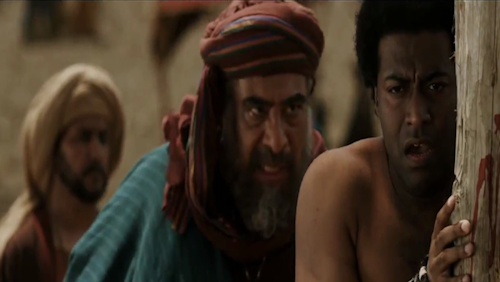
Bilal was dragged into the open desert under the burning sun. A heavy stone was placed on his chest as his tormentors demanded that he abandon his faith and praise their idols. Repeatedly, he refused.
Through unbearable pain, he repeated only one word:
“Ahad… Ahad.”
One God. Only One.
Bilal had no tribe to defend him and no wealth to ransom himself. All he had was faith — and it did not break.
Abu Bakr and the Price of Mercy
Abu Bakr as-Siddiq once passed by and saw Bilal being tortured. He could not stand by and watch.
“How long will you torture this man for saying his Lord is Allah?” he demanded.
Umayyah ibn Khalaf replied coldly, “Buy him, then.”
Abu Bakr paid without hesitation. Every coin he had was given, and Bilal was freed.
The man who once cried “Ahad” under torture would later become the first to call the adhan over Makkah.
Hamzah ibn Abdul Muttalib Accepts Islam
As persecution intensified, the Prophet (saw) continued to call people to Islam with patience.
One day near the Kaʿbah, Abu Jahl publicly insulted and harmed the Prophet (saw). He walked away without retaliation.
Later that evening, Hamzah ibn ʿAbdul Muttalib — the Prophet’s uncle and a respected warrior — learned what had happened. Overcome with anger, he went straight to the Kaʿbah and struck Abu Jahl.
“Do you insult him,” Hamzah declared, “when I follow his religion?”
What began as an act of loyalty soon became genuine belief. Hamzah embraced Islam fully, and his acceptance gave the Muslims new strength.
From that day, Makkah began to fear him by a new name: Asadullah — the Lion of Allah.
Umar ibn al-Khattab: A Turning Point
Among Islam’s fiercest opponents was ʿUmar ibn al-Khattab. Known for his strength and temper, he openly threatened the believers.
One day, sword in hand, he set out to kill the Prophet (saw).
Before reaching him, Umar learned that his own sister and brother-in-law had accepted Islam. Enraged, he confronted them — but what he heard changed everything. Verses from the Qur’an softened his heart, and shame replaced anger.
After washing, he read the words himself.
“They are the truth.”
Umar went directly to Dar al-Arqam and declared his faith. When the companions heard his shahadah, their voices filled Makkah with Allahu Akbar.
From that moment on, Muslims no longer practiced their faith in hiding.
The Boycott of Banu Hashim
The conversions of Hamzah and Umar alarmed Quraysh. Islam was no longer limited to the weak.
In response, they drafted a pact calling for a complete social and economic boycott of Banu Hashim and Banu Abdul Muttalib — the clans protecting the Prophet (saw).
No trade.
No marriage.
No interaction.
The document was hung inside the Kaʿbah, and the Muslims withdrew to the valley of Shiʿb Abi Talib. For nearly three years, they endured hunger and isolation. Children cried from starvation, and food became scarce.
Despite this, their faith remained firm.